
How to Create a Zen Garden Design Meditation Space Backyard That Inspires Calm


From Cluttered Yard to Soulful Sanctuary
A few months ago, I stood in my backyard with a cup of tea in hand, staring at the mess of uneven grass, random tools, and neglected corners. It wasn’t bad, but it definitely wasn’t peaceful. And I realized something: if I wanted more calm in my life, I needed a space that truly reflected that energy.
I began dreaming of a quiet little place I could escape to, without leaving home — a personal meditation nook surrounded by nature, where I could breathe, ground myself, and just be. That dream soon took shape as a Zen garden design, and little by little, I brought it to life.
What started as a weekend idea turned into a life-enhancing project. Today, that peaceful corner of my backyard is where I journal, meditate, stretch, or simply sit in silence with the breeze. If you’re looking to create a calming space of your own, let me take you through every step — from concept to creation — to help you design your very own Zen garden meditation space.
Setting the Intention — What Does Zen Mean to You?

Before touching a single stone, I asked myself: What do I want this space to feel like? For me, it was about simplicity, natural beauty, and serenity. A place with minimal distractions, but full of gentle textures and peaceful energy.
I envisioned:
- Soft gravel underfoot
- A few large, grounding rocks
- Delicate greenery
- Flowing shapes and asymmetry
- A seat or bench for stillness
Zen doesn’t mean perfect. It means present. I let that guide every design choice.
Planning the Zen Garden Layout
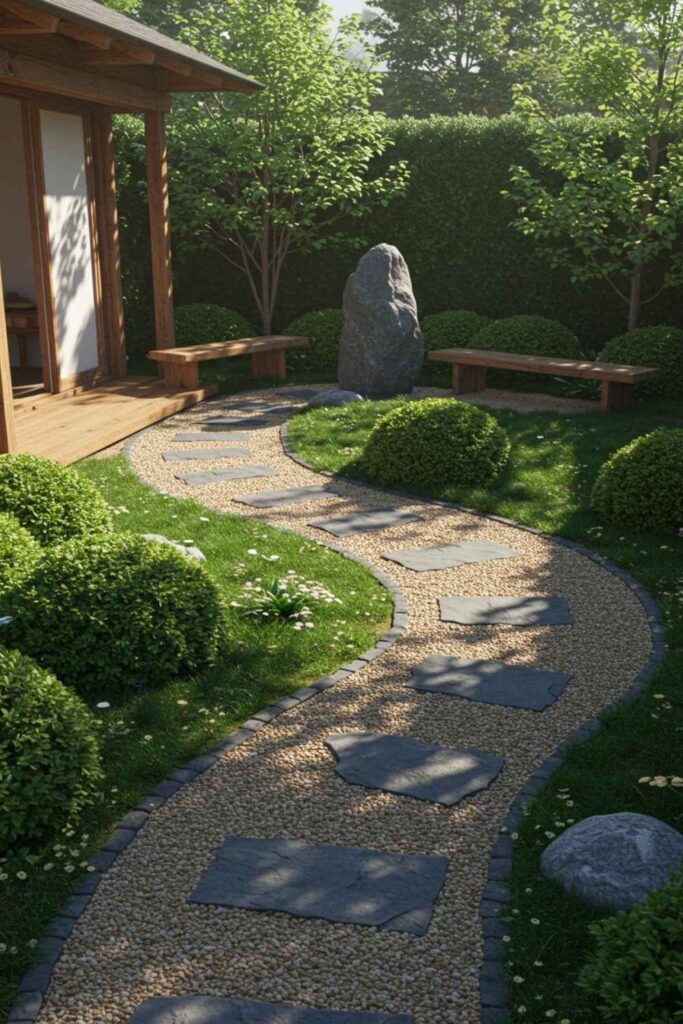
Once the intention was set, it was time to plan. I didn’t have a huge yard, but even a small space can become a Zen haven with thoughtful design.
Here’s how I laid it out:
- Raked gravel path shaped like a curve (symbolizing natural flow)
- A central stone or sculpture as a grounding element
- One corner for seating — a wooden bench with a cushion
- Bordering plants like bamboo, ornamental grasses, or ferns
- A small water feature for sound (I used a tabletop fountain!)
Keep your layout simple and uncluttered. Zen design is all about balance — every element has purpose and space to breathe.
Choosing Natural Materials That Soothe
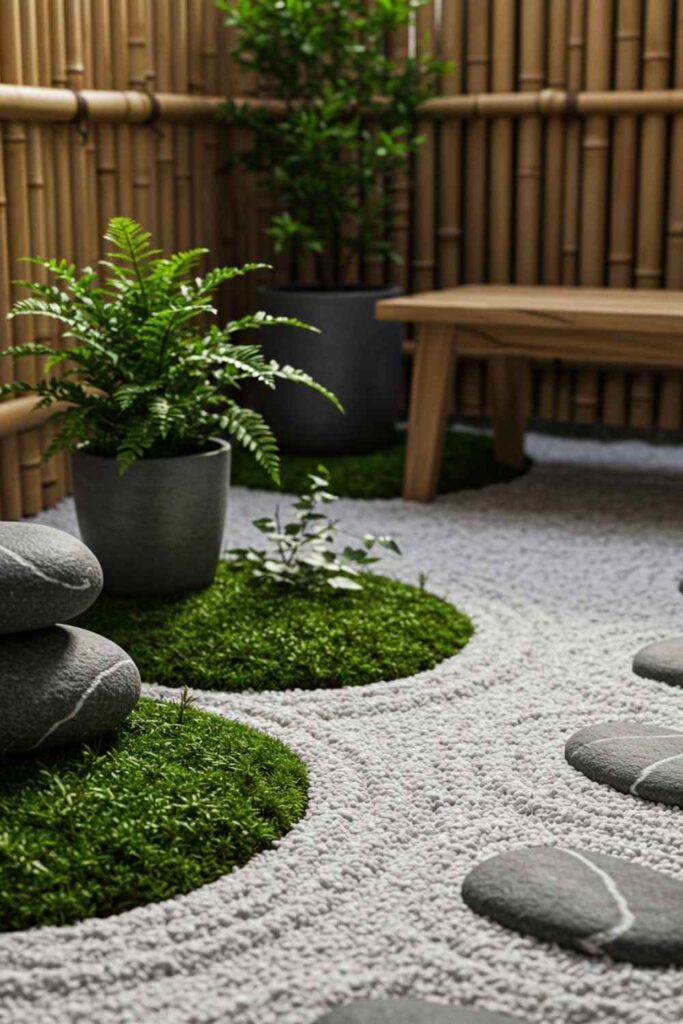
Zen gardens are known for using earthy, natural materials that appeal to the senses. Here’s what I included to keep things grounded and intentional:
My Materials:
- White gravel for raking (symbolizing water)
- Larger flat rocks to sit or meditate on
- Wooden bench for organic warmth
- Bamboo fencing for privacy and a tranquil vibe
- Terracotta pots with ferns and moss
Everything had a soft, neutral tone — nothing flashy, just calming, textural beauty.
I even added a couple of wind chimes that sing with the breeze. It’s these small details that made it feel alive and sacred.
Bringing In Stillness — How I Use the Space

Now that my Zen corner was set, it quickly became my favorite ritual. Here’s how I use it:
- Morning meditation with gentle breathing and gratitude
- Evening journaling as the sun sets behind the trees
- Barefoot grounding — walking slowly over the gravel
- Stretching or yoga under the open sky
- Or sometimes… just sitting in silence, with tea in hand
What surprised me the most? How deeply this small space shifted my energy. It reminded me that you don’t need a retreat center to reconnect with yourself — just a mindfully designed corner of calm.
Your Backyard, Your Zen
Creating a Zen garden doesn’t require perfection — it just takes presence. Whether you have a big backyard or a tiny patio, there’s a way to bring calm into your outdoor space with intention and simplicity.
So ask yourself: What does peace feel like to you? Then build from there.
Would you create your own Zen garden meditation space? I’d love to know what you’d include — a certain plant, a special rock, maybe a water element? Let’s share our dream spaces in the comments